Julius Caesar
The Conqueror of Gaul and the Fall of the Republic
A brilliant general, a daring reformer, and the man who changed the course of Roman history forever.
Gaius Julius Caesar (100–44 BCE) was one of the most influential figures in world history. His military genius, political ambition, and reforms transformed Rome from a crumbling republic into the foundation of an empire. But his rise to power also triggered the final crisis of the Roman Republic, leading to his assassination and the dawn of imperial rule.
Life and Legacy of Julius Caesar
- Birth of Julius Caesar
Born into the Julian clan, an old patrician family of Rome.
- The First Triumvirate
Forms a secret political alliance with Gnaeus Pompey Magnus and Marcus Licinius Crassus to dominate Roman politics.
- The Gallic Wars
Conquers Gaul and extends Roman territory to the Atlantic Ocean, writing his famous 'Commentarii de Bello Gallico'.
- Crossing the Rubicon
Defies the Senate's order to disband his army by crossing the Rubicon River into Italy, igniting civil war with Pompey.
- Dictator and Reformer
Appointed Dictator for Ten Years. He institutes major reforms, including reorganizing the Senate and reforming the Roman calendar.
- Assassination of Caesar
Murdered in the Senate by conspirators including Marcus Junius Brutus and Gaius Cassius Longinus, who sought to restore the Republic.
Caesar's Cursus Honorum (Path of Honor)
Organized extravagant public games and building projects, incurring massive debt but gaining immense popularity with the Roman people.
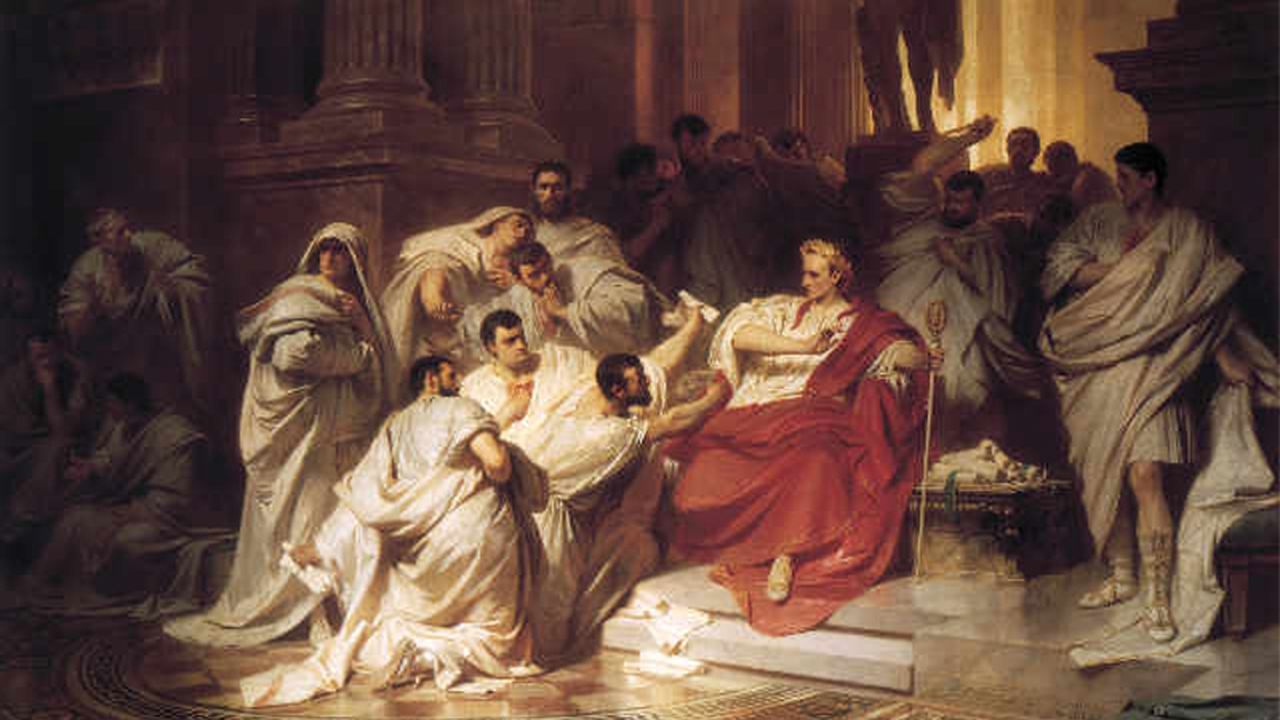
Caesar addressing his legions before battle.
Julius Caesar’s military brilliance was unmatched. His campaigns in Gaul not only expanded Rome’s borders but also secured immense personal power and wealth. His victories inspired loyalty among his soldiers and fear among his enemies. Yet, Caesar’s ambition to centralize authority and bypass the Senate made him a target for the defenders of the old Republican order.
The Ides of March and the Birth of the Empire
Caesar's declaration of himself as Dictator Perpetuo was the final straw for the Republican elite. On March 15, 44 BCE, he was assassinated by a group of senators, including his protégé Brutus, who feared he intended to become king. Ironically, the conspirators' act did not save the Republic. Instead, it plunged Rome into further civil wars, ultimately leading to the victory of Caesar's heir, Octavian (Augustus), and the definitive end of the Republic.
Fascinating Facts about Julius Caesar
- The Julian calendar, introduced by Caesar in 46 BCE, is the basis of the modern Gregorian calendar.
- He was the first Roman leader to appear on a coin during his lifetime.
- Caesar was an accomplished writer, known for his clear, direct Latin style.
- His famous last words 'Et tu, Brute?' are from Shakespeare’s play, not ancient sources.
- After his death, Caesar was officially deified by the Roman state — becoming 'Divus Julius'.